
What Strong Retail Communities Do Differently
Every retail neighbourhood has its own flavour.
The mix of businesses, the energy on the street, the type of customer it draws. Together, these things create an identity. Over time, that identity becomes familiar. People know what to expect when they show up. That familiarity builds trust, and trust builds foot traffic.
But sometimes, that image quietly starts to erode.
It's rarely dramatic. It's more of a slow drift: changes in the business mix, a gradual lack of upkeep, retailers stretched so thin that presentation slips down the priority list. Whatever the cause, what was once cohesive starts to feel uneven. Some storefronts are beautifully maintained. Others look like they haven't changed since the previous tenant. Some retailers refresh seasonally. Others have the same setup they opened with.
And none of it is anybody's fault, exactly. But the effect on the district is real.
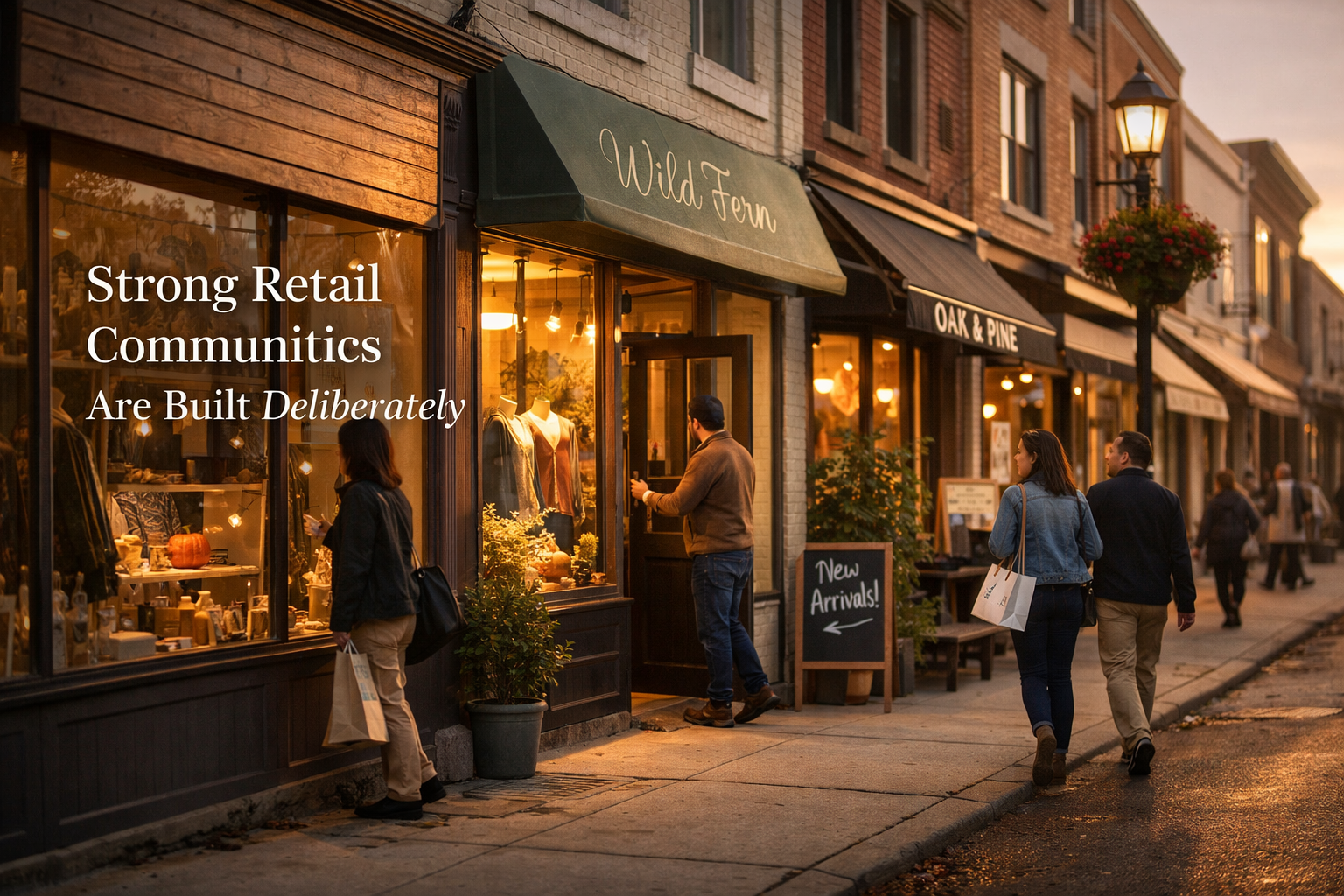
To be clear: this isn't an argument for uniformity. Variety is part of what makes retail streets worth visiting. Independent expression matters. But there's a difference between a street with diverse, well-maintained businesses and one where standards have quietly slipped across the board. Updated windows, visible signs of life inside the space, the feeling that someone is paying attention. These signals tell customers the district is alive and worth their time. And that perception compounds quickly in both directions.
When retail visual merchandising is inconsistent across a district, it doesn't just affect individual stores. It affects how the entire community reads to someone walking by for the first time.
What It Actually Comes Down To
Strong retail communities are built from the inside out.
Not just through events or marketing, but through some kind of connective tissue: a leader, a program, an organization that equips retailers with real resources and makes them feel less isolated. When that structure exists, retailers know where to turn when they're stuck. They understand the pressure points of running a retail business, and they feel like someone in their corner actually gets it.
The ripple effect goes further than you might expect. When retailers are better supported, foot traffic increases. Tenant retention improves. The little frustrations that tend to land on BIA managers and property managers start to diminish. The overall tone of the district shifts, and customers feel that, even if they couldn't tell you exactly why.
Tenant engagement doesn't just happen through programming. It happens when retailers feel genuinely supported in the day-to-day realities of running their space. And a big part of that is visual: how their store looks, how it participates in seasonal campaigns, how it fits into the broader rhythm of the street.
Retailers want help. What they don't always have is clear access to it.
Practical Ways to Strengthen That Internal Layer
There's no single formula here, and most of these don't require a big budget. Just intentionality.
Newsletters with actual value. Not just event announcements. Real resources: grant information, practical guidance, links to subject-matter experts. More specialists are willing to contribute content or share existing materials than most organizers realize, especially when it serves a community they care about.
Go-to partners for common pain points. When a BIA or retail district identifies trusted specialists in areas that keep coming up (visual merchandising, digital marketing, operations), retailers get faster access to solutions instead of starting from scratch every time.
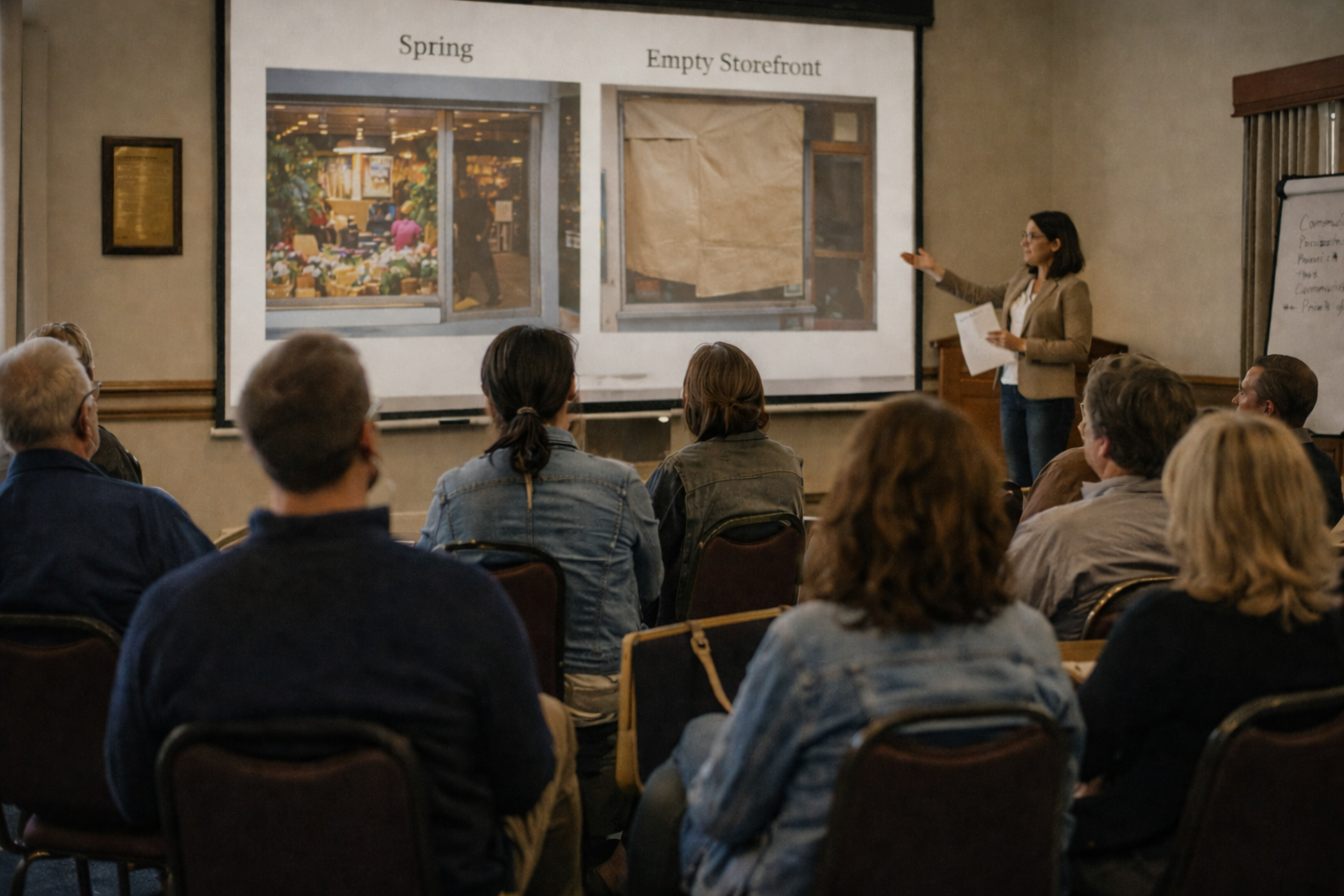
Focused training sessions. Short, practical workshops around recurring challenges: how to approach a seasonal storefront refresh, what actually moves the needle on retail display, how to plan a window campaign without a big budget. Actionable content that retailers can use immediately tends to land better than broad overviews.
Group retail support programs. Bringing in a visual merchandising consultant to work with a group of tenants at once can make expertise more accessible than it would be for individual retailers on their own, and it creates a shared experience that builds community in itself.
Peer connection. When retailers start talking to each other, sharing experiences, answering each other's questions, building actual relationships, the district grows stronger in ways that no single program can manufacture. That culture is worth nurturing.
What This Looks Like When It's Working
We've had the chance to see different versions of this play out across retail communities in Canada, and the specifics vary, but the common thread is always the same: intentional connection between organizers and the people actually running the stores.
Economic development centres hosting focused sessions during Small Business Week so retailers walk away with tangible tools for improving their displays and planning ahead. Market programs offering structured visual merchandising support at the planning stage and a post-opening walkthrough to help vendors actually use what they've set up. Leasing teams and property managers bringing in group training sessions ahead of a new area launch, or when an older retail space is ready for a refresh. Retail shows building tight-knit communities where makers exchange knowledge and support each other well beyond the show floor.
In each case, the goal isn't uniformity. It's equipping people to perform better within a shared ecosystem and giving retailers the kind of storefront activation support they wouldn't necessarily be able to access on their own.
Why It's Worth Thinking About Now
As BIAs and retail communities across Canada plan ahead for 2026 programming, the conversation usually centres on events, sponsorships, and marketing. Those matter.
But what customers actually see when they walk the street matters just as much, and it's often the layer that gets left out of the plan.
When storefronts show signs of care and participation, the district reads as active. When retailers feel supported, they're more likely to show up for community initiatives. And when that engagement becomes a pattern, the district builds a kind of momentum that's hard to replicate through any single campaign.
If you're exploring how to build a more structured retail community support program, whether through training, group visual merchandising services, or ongoing tenant engagement strategy, it's worth looking at what a partnership model can offer. VM ID works with BIAs, property managers, leasing companies, and market organizers across Canada to provide exactly that kind of layered support. You can see more about how those partnerships are structured here.
Strong retail communities don't happen by accident. They're built deliberately, through connection, shared resources, and consistent standards that make it easier for individual retailers to do their best work.
And that strength is visible long before anyone reads about it online.