
How to Strategize Your Visual Merchandising for the Year
A practical approach to campaigns, seasons, and sales moments as you plan for 2026
As many retailers begin planning ahead for 2026, it’s a good moment to step back and look at the full year, not just the next holiday or seasonal change.
Visual merchandising works best when it’s planned, not rushed. Yet even well-run retail teams can find themselves reacting to dates on the calendar instead of fully leveraging the moments that matter most to their customers. Over time, this can lead to missed selling opportunities, uneven investment, or displays that feel visually strong but slightly out of sync with shopper behaviour.
A strong annual strategy brings product, customer behaviour, timing, and budget into alignment. This is where visual merchandising moves beyond decoration and becomes a true business tool.
At its core, visual merchandising is the practice of presenting products in a way that supports how customers shop, clarifies the brand, and drives sales. When planned across the full year, it helps ensure the right products feel most important at the right time.
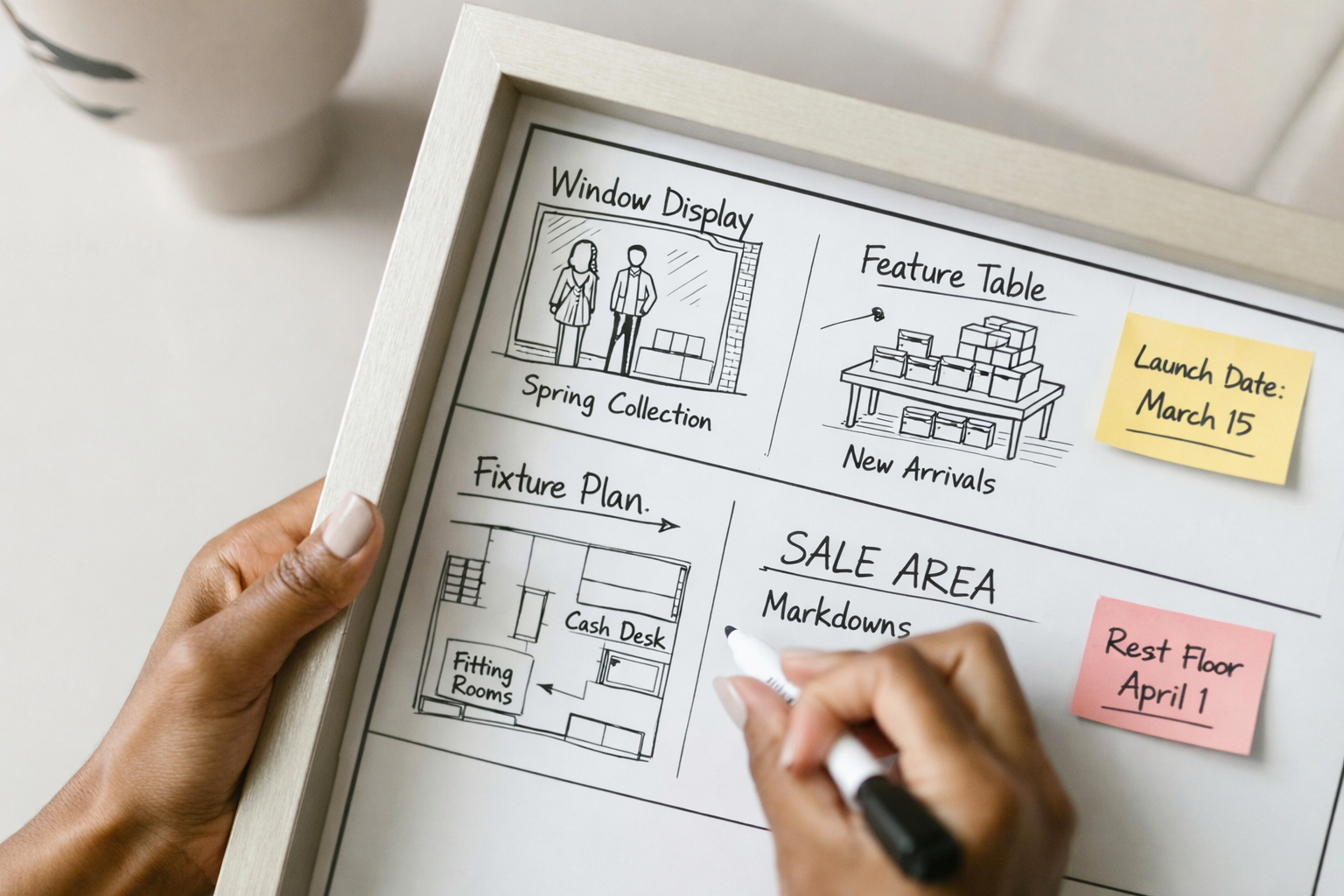
Start with product and campaigns, then align them to key shopping moments
Before looking at seasonal décor or key retail dates, start with your collections and campaigns, then take a critical second step:
pressure-test those timelines against the moments when your customers are most likely to shop.
Most retailers plan product deliveries well in advance. Where things can sometimes fall out of sync is in how those arrival dates support the most meaningful selling periods throughout the year.
Ask yourself:
Do these products arrive early enough to fully support key shopping moments?
Are there collections that could feel more relevant if their visual focus shifted slightly earlier or later?
Are strong products landing just after a high-traffic period, when they could have had greater impact with a different storytelling approach?
When product timing and customer behaviour are aligned, visual merchandising works harder. Displays feel timely, stories feel relevant, and products naturally carry more significance because they’re presented when customers are already primed to buy.
As retailers plan for 2026, this alignment becomes even more important. Small adjustments in how and when collections are visually introduced can significantly extend selling windows without changing the product itself.
Understand how your customer shops throughout the year
Once product timing is clear, zoom out to the customer.
Every retailer has predictable moments when customers naturally shop more, but these moments are not always tied to traditional holidays. Reviewing past performance alongside customer behaviour often reveals patterns that help refine when products should take centre stage.
Think beyond obvious retail dates and consider:
Lifestyle shifts like summer travel or winter routines
Practical needs such as back to school, flu season, or wardrobe transitions
Emotional drivers like gifting moments, self-care periods, or seasonal resets
Local and regional rhythms that affect foot traffic
For example, we’re seeing renewed retail momentum in Edmonton, creating different opportunities and traffic patterns than cities like Toronto or Vancouver. Understanding these nuances helps ensure product stories are aligned with when customers are most receptive, rather than simply following a generic calendar.
Each of these moments becomes more powerful when the right products are visually prioritized at the right time.
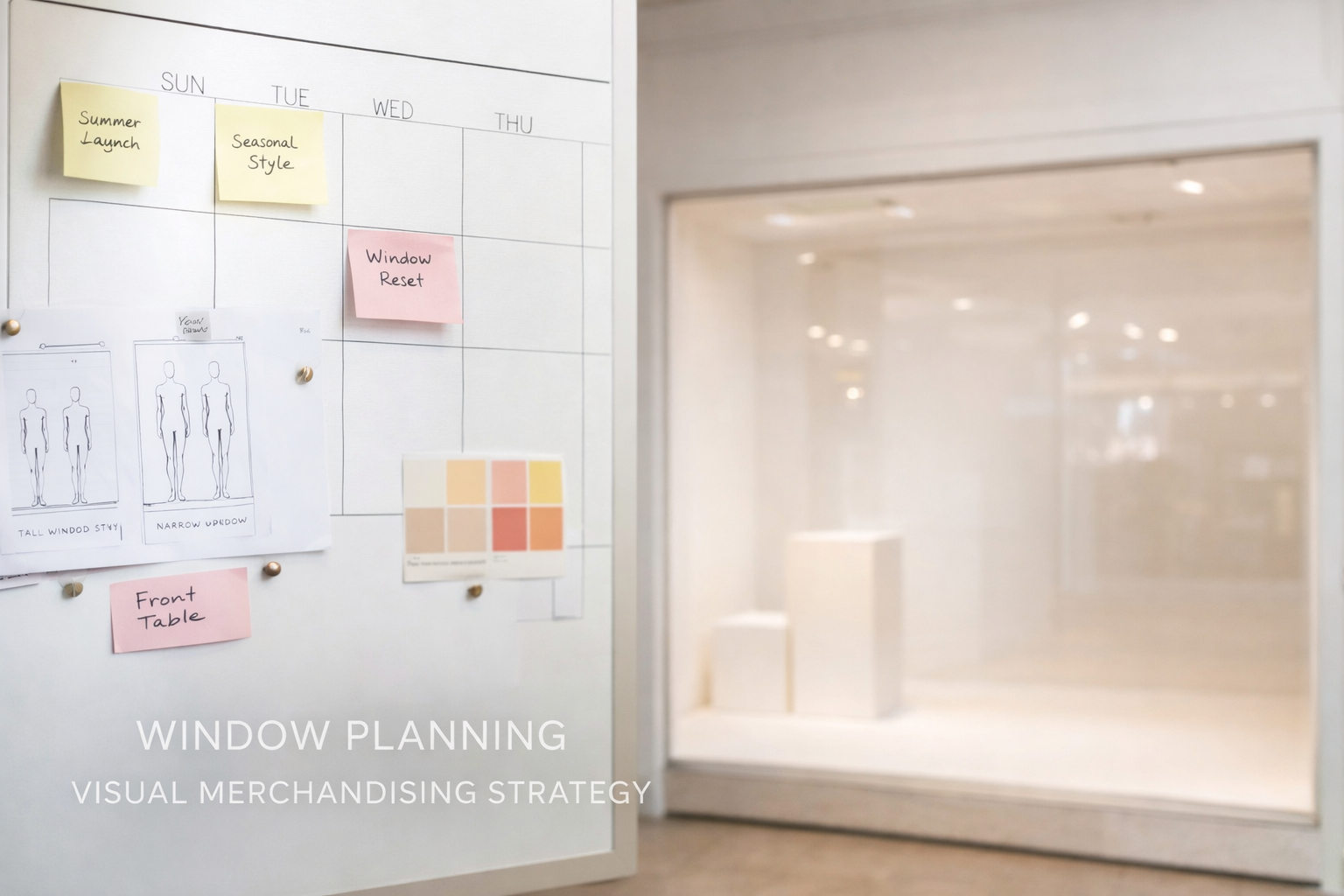
Map the year visually, not just operationally
With product and customer moments identified, map everything onto a yearly calendar.
This is where alignment becomes visible.
Focus on:
How long each story is given to sell, not just when it’s installed
Whether set-up timing allows products to fully benefit from peak shopping periods
Where stories overlap and how primary and secondary messages are prioritized
If two stories don’t belong together, one doesn’t need to disappear. A secondary story may simply shift to an in-store feature while the primary story leads the window or front-of-store moment. Clear hierarchy keeps the message focused and supports stronger sell-through.
Plan intentionally for quieter periods
Once the full year is mapped out, most retailers notice natural gaps. These are not weaknesses, they are opportunities.
Quieter periods are ideal for:
Timeless, brand-led storytelling
Category-driven merchandising
Clean, product-focused presentations that allow key items to breathe
These moments help balance the year visually and operationally, while giving teams breathing room between more intensive campaigns.
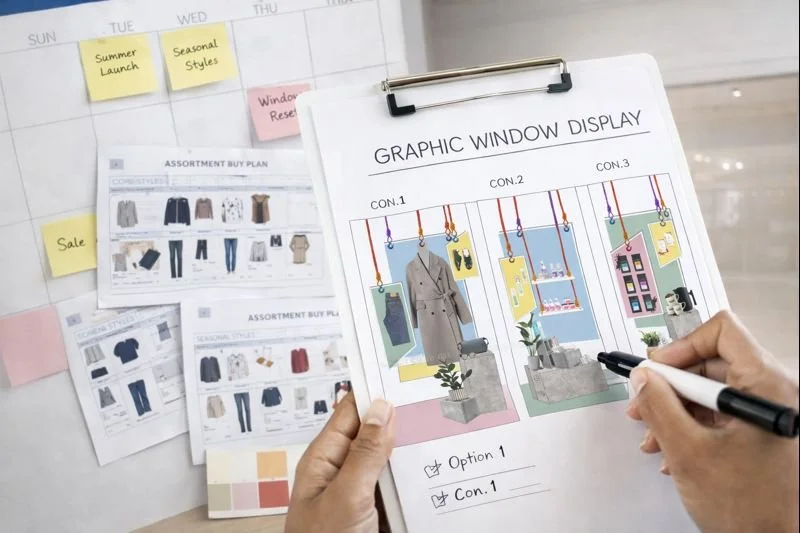
Work backwards into planning, sourcing, and prep
With your calendar in place, reverse-engineer each moment.
For every key story, identify:
When planning realistically needs to begin
When design decisions should be finalized
What needs to be sourced, built, or reused
When installation must happen to maximize selling time
This step is often where strategy turns into relief. When timelines are realistic and aligned, visual merchandising becomes far less reactive and much easier to execute consistently.
Allocate budget where alignment and impact are strongest
Not all visual merchandising moments require the same level of investment.
Some periods are more sales-productive, higher traffic, or more visible. These moments often deserve a larger share of the budget because the return is clearer. Other periods may rely more on re-merchandising, styling, or simple tools like reusable sign holders to clarify messaging.
Planning budget alongside the calendar ensures spending aligns with opportunity, protecting cash flow while still supporting strong visual impact, especially important as retailers plan ahead for 2026.
Why this approach matters
When visual merchandising is planned across the full year, with product timing aligned to real customer shopping moments, it stops being reactive and starts supporting the business more holistically.
As retailers look ahead to 2026, quieter months are often the best time to do this work. They allow space to reflect, plan, and build a clear framework that makes busier seasons more efficient and more profitable.
A thoughtful annual strategy ensures windows and sales floors are not just visually appealing, but purposeful, well-timed, and aligned with how customers actually shop.
VM ID Inc. is a visual merchandising agency supporting retailers, property managers, and retail communities across Canada, including Toronto, Vancouver, Calgary, Montreal, and Edmonton. We help turn retail spaces into clear, strategic selling environments that support both brand and performance.