
5 Holiday Retail Display Ideas and Why They Work
Holiday displays have a lot of work to do, with some of the highest expectations of the year. They need to evoke the spirit that the season brings, capture attention when all of the retail spaces are already loud at the same time to passersby, showcase the most relevant products to purchase, and still make the store easy to shop during one of the busiest retail periods of the year. Let’s simplify: The strongest holiday displays and set-ups are the ones where the visual idea supports the merchandise, the brand and the way customers actually shop.
Here are five holiday retail display ideas to consider this season, along with why each one works from a visual merchandising perspective.
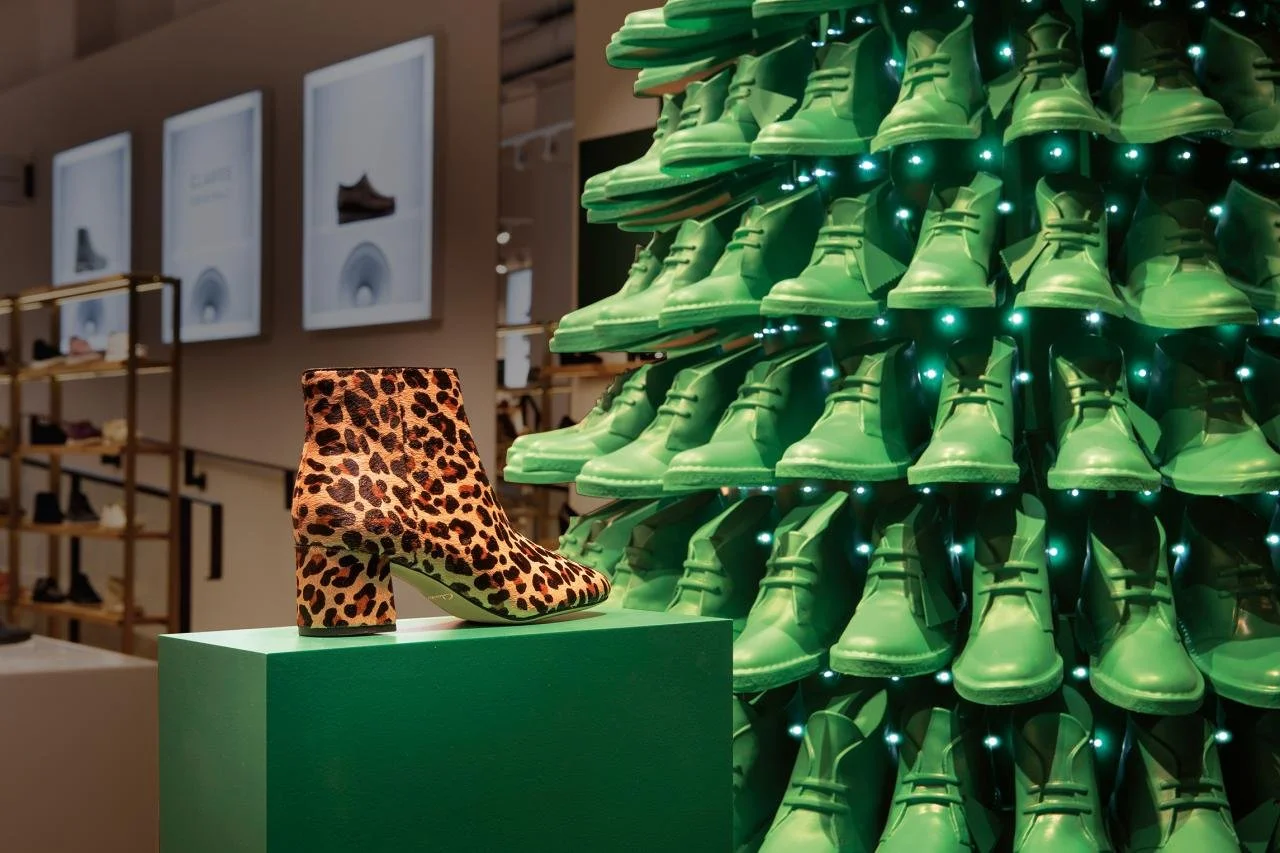
Image credit: Andrew Brown / LinkedIn. Clarks “Festive 19” holiday display, 2019.
1. Make the Product Part of the Holiday Décor
Before bringing in a collection of holiday props, take a look at the merchandise itself. Could stacked boxes create the shape of a tree? Could repeated products become part of a larger installation? Could accessories, books, beauty products or packaged goods be incorporated directly into a holiday feature? Using merchandise as part of the visual concept can create a strong seasonal statement without allowing the décor to overpower what you’re actually trying to sell.
Why it works
One of the easiest mistakes to make during the holidays is adding so much decoration that the product becomes secondary. This is how stores can leave customers window-shopping instead of actually shopping. When merchandise is incorporated directly into the display, the element attracting attention is also helping showcase what the retailer sells. Repetition can create scale and impact, while recognizable holiday shapes or arrangements make the display feel seasonal without needing excessive additional décor. It can also be a particularly useful approach for retailers working with limited display budgets.
Try this
Before sourcing holiday props, look at your existing merchandise and packaging. Consider whether repeating one product, colour or shape could become the foundation of the display itself.
2. Turn Gift Merchandise Into a Destination
Holiday shoppers are often entering a store with a very different mindset than they do throughout the rest of the year. They may not be looking for a particular product category. Instead, they’re looking for a gift for a host, something under $50, a stocking stuffer or simply something for the person who is difficult to shop for. Rather than merchandising everything strictly according to traditional departments or categories, consider creating dedicated gifting destinations around the way customers are actually shopping, or a client profile.
Why it works
Good visual merchandising helps reduce the amount of effort required from the shopper. Grouping complementary products around a clear gifting idea makes it easier to understand the offer quickly while also creating opportunities to cross-merchandise products that may normally live in different areas of the store. Clear signage, if needed, can make these displays even stronger, particularly if the store is too large to grasp what each zone is from a distance.
Think beyond a broad “Holiday Gifts” message and consider more specific categories such as:
Gifts Under $50
For the Host
Little Luxuries
Stocking Stuffers
Gifts for the Teacher
Gifts for “Just in Case”.
The more immediately the shopper understands what the display is helping them accomplish, the more useful it becomes.
Try this
Choose one common holiday shopping mission and build a small destination around it using products from multiple categories. Make sure the sign communicates the idea before the shopper even reaches the display.
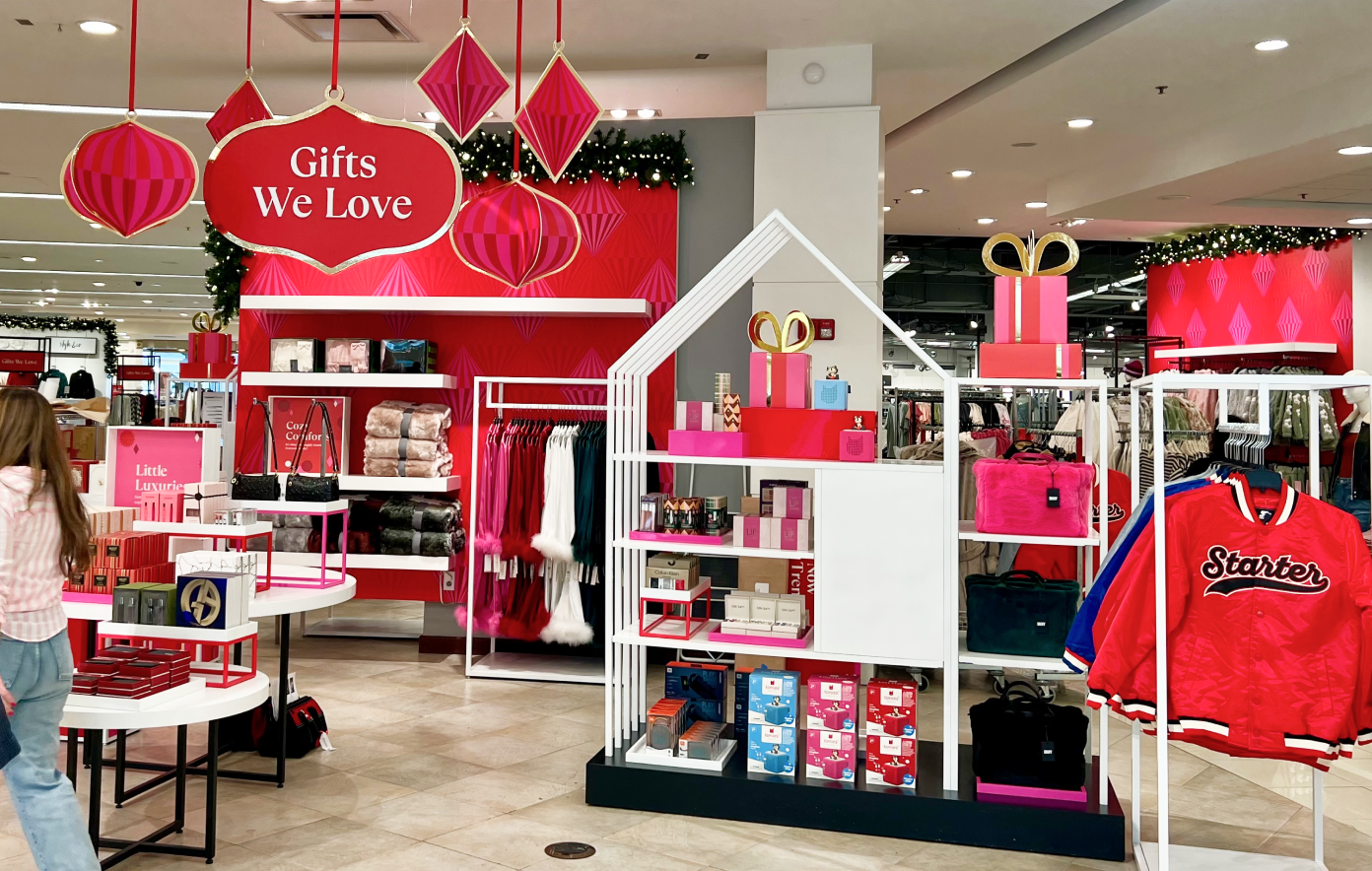
Image credit: Stephanie Perez / Macy’s
3. Go Oversized With One Strong Element
Holiday displays can quickly become too busy. Instead of trying to create excitement by filling every available surface, consider doing the opposite: introduce one oversized visual element and allow it to become the focal point. That could be a dramatic bow, oversized ornament, wreath, suspended installation, gift box or another seasonal element that fits the brand. Then, simplify everything around it.
Why it works
Visual hierarchy tells customers where to look first. An oversized element can attract attention from farther away and establish the holiday story immediately. When the surrounding merchandising is more restrained, the eye has somewhere to land rather than being asked to process several competing ideas at once. Scale often creates more impact than quantity. A single strong feature can therefore feel much more intentional than adding numerous small decorations throughout a display.
Try this
Step back far enough to see the display the way an approaching shopper would. Is there one obvious focal point? If everything has the same visual weight, consider glorifying one part of it, or bulking up a single item to imitate the one strong element, rather than having them all compete with one another.
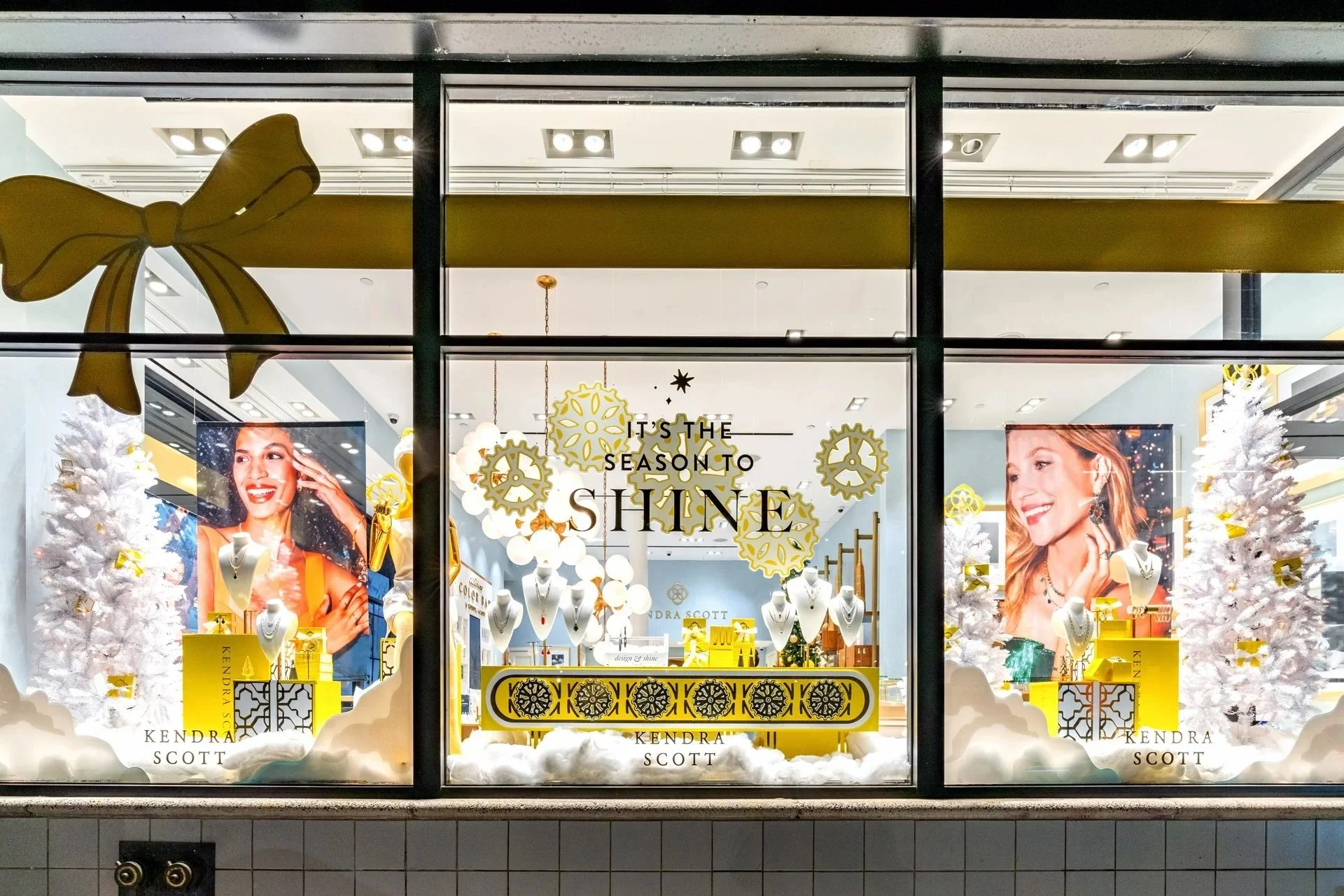
Kendra Scott Flagship Holiday ’22. Design, production and installation by Mowax Visual
4. Build a Holiday Colour Story That Still Feels Like the Brand
Holiday merchandising does not automatically need to mean red, green and gold. A retailer’s holiday presentation can be monochromatic, natural, metallic, colourful, minimal or unexpected, as long as it still feels connected to the brand. A luxury jewellery retailer, children's store, fashion boutique and sporting goods brand should not necessarily look like they sourced their holiday décor from the same place. Start with the existing brand identity and consider how it can be shifted seasonally.
Why it works
Strong seasonal visual merchandising should still feel like an extension of the retailer. Colour is one of the fastest ways to establish a visual story, but introducing an entirely unrelated palette can make the holiday presentation feel disconnected from the rest of the store. Using existing brand colours alongside one or two seasonal accents can create a much more cohesive result. It also helps holiday displays feel distinctive rather than interchangeable with every other retailer using the same traditional Christmas palette.
Try this
Start with the colours that already define the brand, then explore which one or two colours, finishes or materials could make the palette feel holiday-ready without losing the brand identity.
5. Merchandise a Complete Holiday Moment
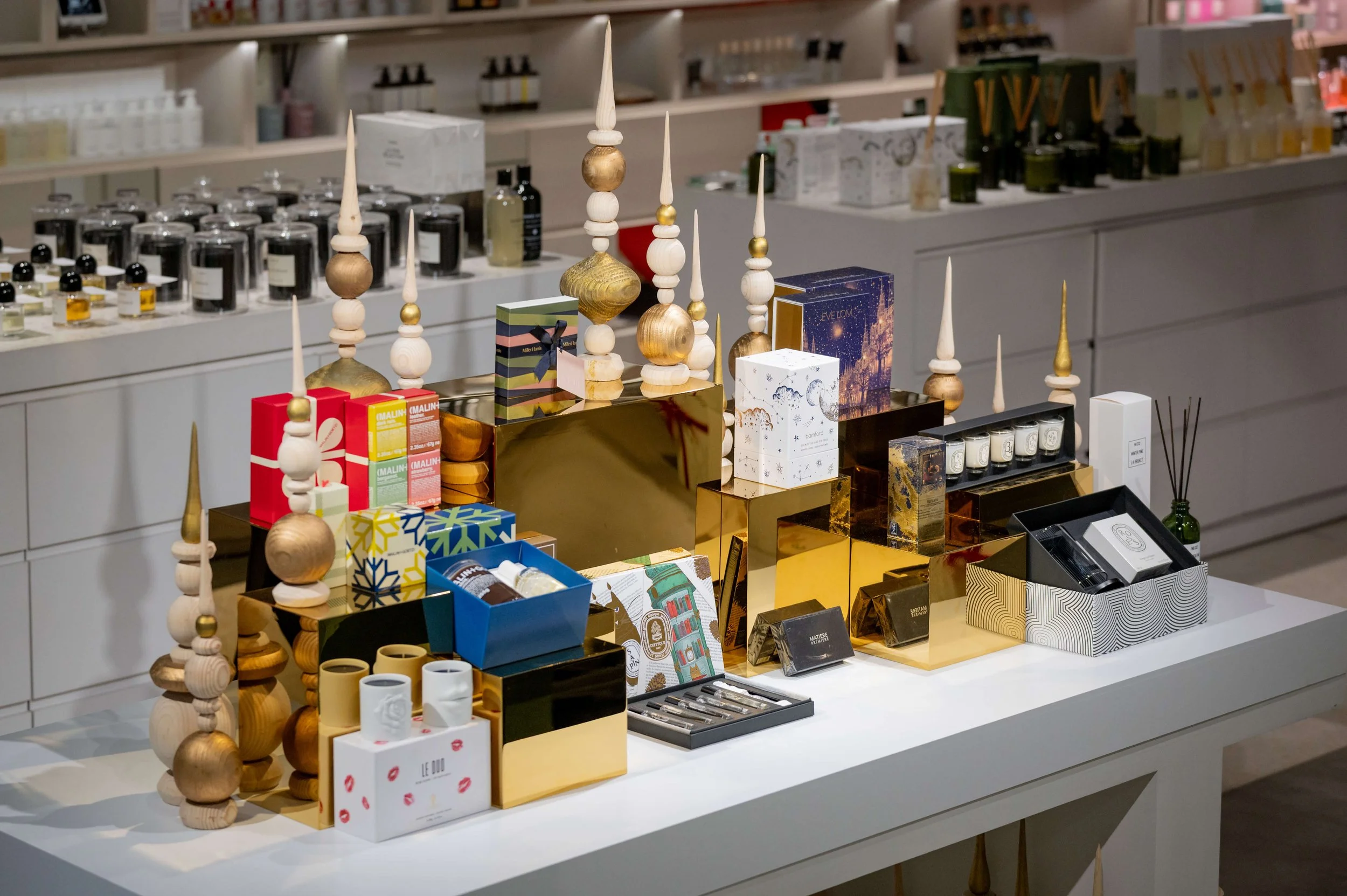
0/10 APOTHECARY Holiday Visual Merchandising. Design by Textual Studio.
Instead of displaying products as individual items, show customers how several products could come together within a holiday moment. For a fashion retailer, this could be a complete holiday-party look with accessories. For a home retailer, it might be a styled holiday table. For beauty or wellness, it could be cult favourites for self-gifting. For food and specialty retail, it could be everything needed for entertaining or bringing a host gift. The specific story will depend on the retailer, but the principle is the same: help the shopper visualize the products being used together.
Why it works
People often respond more easily to a complete idea than to a collection of unrelated products, particularly for the items that require more context. Lifestyle merchandising provides context. It helps shoppers understand how products work together and can introduce complementary items they may not have originally planned to purchase, which makes shopping easier while also creating opportunities to increase units per transaction.
Try this
Choose one holiday occasion your customer is likely to experience and merchandise everything they might need around that moment, then edit. The goal is to communicate the story clearly via effective curation, not to include every possible related product.
Holiday Displays Should Still Make the Store Easier to Shop
Holiday is one of the easiest times of year for retail spaces to become visually overloaded. More products are arriving than usual, promotional signage increases, seasonal décor appears endlessly, and displays require more frequent updates. However, the strongest holiday displays balance seasonal excitement with the fundamentals of good visual merchandising: clear focal points, strong product presentation, thoughtful adjacencies, visual hierarchy and an easy-to-understand shopping experience. The holiday layer should enhance those principles rather than compete with them.
Preparing your retail space for holiday?
VM ID supports retailers with everything from fresh eyes on an existing set-up to holiday display planning, store audits, space optimization and hands-on visual merchandising support.
Take a look at our past projects and reach out for more support.